Holi festival in Nepal is also known as the Festival of Colors. The Festival of Colors is a vibrant and cheerful festival that is observed every year on the full moon day of the Hindu calendar month of Falgun (March). The celebration of Holi commemorates the onset of spring and the triumph of good over evil. In Holi, people gather to smear colored powder and splash colored water to each other and have a good time with some sweets, drinks, and dance.

Mythology
According to Vishnu Puran, in Treta Yug, there was a King Hiranyakashipu (Hiranyakashyap) who was given a blessing by Lord Brahma. The boon was that he could not be killed by any man, animal, or by any weapons, neither in the sky nor on earth, neither in day nor in night, ultimately becoming Unkillable. Hiranyakashipu had a son called Prahalad, a devotee of Lord Vishnu. Hiranyakashipu didn’t like Prahlad worshiping Lord Vishnu. To get rid of his own son, Hiranyakashipu did everything from poisoning his food to throwing him from a cliff.
At last, he called his sister Holika for the job to get done. Holika was blessed with the boon of not getting burned in the fire. So, Holika took Prahalad and sat on a big fire. But, nothing happened to Prahalad; instead, Holika was the one to die. People then started celebrating the death of Holika and started celebrating the day as Holi. Later HiranyaKahyapu was killed by Narasimha, the fourth avatar of Lord Vishnu. Further, Prahalad became a king and ruled India.
When is the Holi Festival Celebrated?
Holi is celebrated on the full moon day of Falgun, known as Fagu Purnima, which usually falls in late February or March. In the hills, including Kathmandu Valley and Pokhara, people celebrate on the full moon day itself, while the Terai region celebrates one day later, so you can photograph the festival on two consecutive days in different parts of Nepal.
Where People Celebrate Holi festival in Nepal?
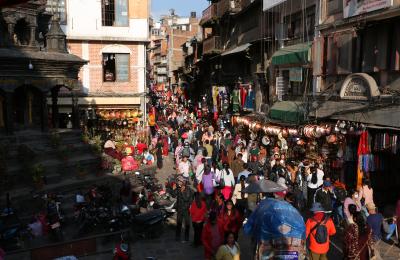
People go to temples in the morning, and later they gather in a specific place or a program to enjoy Holi. Big parties are hosted by restaurants, big brands, and even malls. Mostly, people in Kathmandu gather in Basantapur Durbar Square to enjoy Holi.
How Do You Celebrate Holi in Nepal?
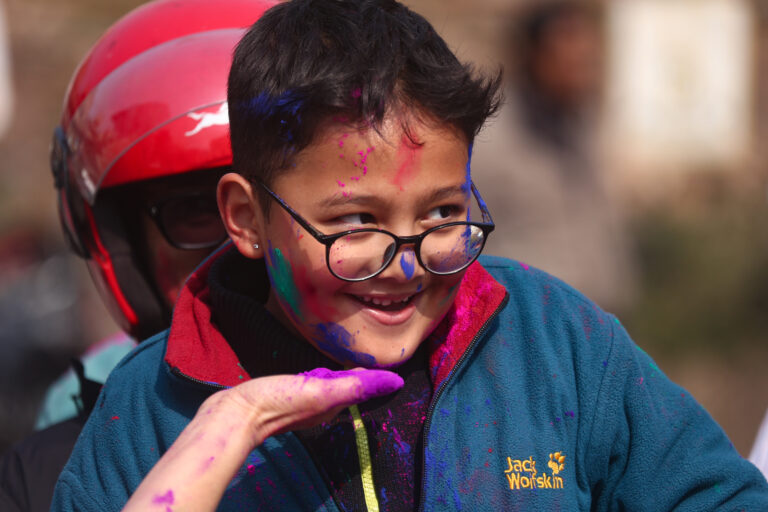
Holi is celebrated with friends, family, and neighbors. People throw multicolored water balloons, water pipes (pichkari) and smear color powders on each other. On this day, most individuals wear basic white clothing to allow the vibrant colors to sit on their clothes. Some people also consider Holi as the day to resolve past disagreements and strained relationships.
Where to click photos during Holi in Nepal?
As a photographer in Nepal, Holi is not a festival to miss. Thus, you must take pictures from the places where people are enjoying Holi celebration. For that, you can go to local parks, residential neighborhoods, or restaurants. However, you must make sure to go to such places using google map or a person who can assist you with locations. If possible, go to different locations and bring variety to your photography.
Holi Festival in Nepal: Photography Guide
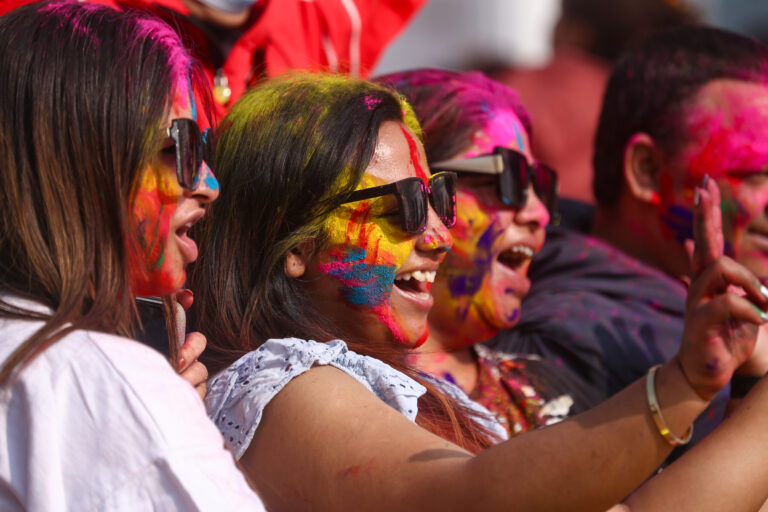
Photographing the Holi festival in Nepal is exciting, fast and messy, so preparation matters. Basantapur Durbar Square in Kathmandu is the busiest spot, with music, dancing and clouds of colour from late morning. Lakeside in Pokhara offers a festive mix of locals and travellers against the backdrop of Phewa Lake, while towns in the Terai such as Janakpur and Birgunj celebrate a day later with a strong local flavour.
Holi Festival in Nepal: Traditions to Photograph
In Kathmandu, the Holi festival in Nepal begins about a week before the full moon, when a tall wooden pole decorated with colourful cloth strips, called the Chir, is raised at Basantapur Durbar Square. The pole stands throughout the celebrations and is burned on the night of Fagu Purnima, a ceremony that makes a striking subject for night photography. In the Terai, families light Holika Dahan bonfires on the eve of the festival to mark the victory of good over evil, and the next morning the streets fill with colour, music and dancing. Sweets, home-cooked snacks and visits to relatives make the day as much about family as about colour.
Protecting Your Camera During Holi
Cover your camera with a rain sleeve or a clear plastic bag sealed with tape, and use a UV filter to protect the front of the lens from powder and water. Avoid changing lenses outdoors; a single zoom lens such as a 24–70mm covers most situations. Keep a blower and microfiber cloths in a sealed pouch for cleaning afterwards, and use a fast shutter speed to freeze flying powder and splashing water.
Respect and Safety
Holi is joyful, but not everyone wants to be covered in colour. Ask before photographing people up close, avoid targeting anyone who is clearly not taking part, and stay aware of crowds. You can learn more about the festival’s origins on Wikipedia and explore more festival images of Nepal on ImagePasal.
Tips To Photographers of Nepal While Taking Holi Celebrations
- Be with the crowd. You should always blend in with the crowd to get the perfect Holi shot.
- Capture close-up images of people in groups, each with a different color on their face, laughing and enjoying themselves with their pals.
- To protect your eyes, wear shades/sunglasses as often as possible, but get cheap ones that you won’t mind discarding.
- Take a decent picture of the color powder that has been organized properly.
- Travel around the location to get a variety of images. You can also get aerial shots.
- Take along waterproof camera gear and waterproof dry bags to avoid mess caused by water and thick powder.