The Essence of Bhaktapur: A Celebration of Culture through Photography
Bhaktapur photography took centre stage when Bhaktapur, a city that tells stories of history, culture, and tradition, came alive through the lens of five talented photographers. ImagePasal, in collaboration with the Bhaktapur Tourism Development Committee, presented The Essence of Bhaktapur – A Photo Exhibition. This visual journey captured the essence of Bhaktapur, showcasing its vibrant lifestyle, heritage, and rich traditions.
The exhibition featured the works of photographers Amit Machamasi, Rojan Shrestha, Saurav Thapa Shrestha, Chandra Chakradhar and Nandu Shrestha who has grown alongside Bhaktapur’s beauty over the years. Each photographer brought their unique perspective, telling visual stories that celebrate Bhaktapur’s timeless beauty.
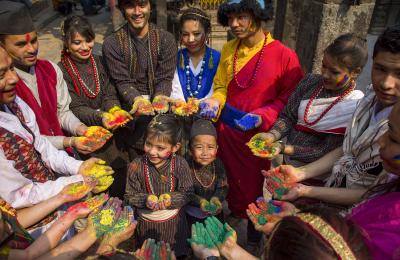
Bhaktapur continues to feel authentic on so many levels. Women dressed in traditional Hakupatasi and men in Daura Suruwal are sights unique to Bhaktapur, rarely seen elsewhere in the Kathmandu Valley. The heritage here is another standout— houses and their façades are carefully preserved and even reconstructed to maintain the old-times charm.
What’s even more remarkable is how traditions and culture thrive here. From elderly men to young children, everyone participates in festivals and rituals with great enthusiasm and excitement. These elements embody why Bhaktapur retains its spirit so naturally—a quality that should ideally be mirrored in all historic cities across the valley. Patan, for instance, still holds pockets of this kind of authenticity, making it remarkable.
These cultural moments and portraits of people in the photographic display has shown Bhaktapur a treasure worth cherishing. They were windows into the essence of a city that remains timelessly authentic.
Bhaktapur Photography: Best Places to Shoot
The exhibition showed how much Bhaktapur has to offer, and the city remains one of the most rewarding destinations for Bhaktapur photography in the whole Kathmandu Valley. Its compact old town is easy to explore on foot, and every square has its own character.
Bhaktapur Durbar Square
The former royal square is home to the Palace of 55 Windows, the ornate Golden Gate and the stone Vatsala Durga temple. Early morning, before tour groups arrive, is the best time to photograph the carved wood and brick architecture in soft, even light.
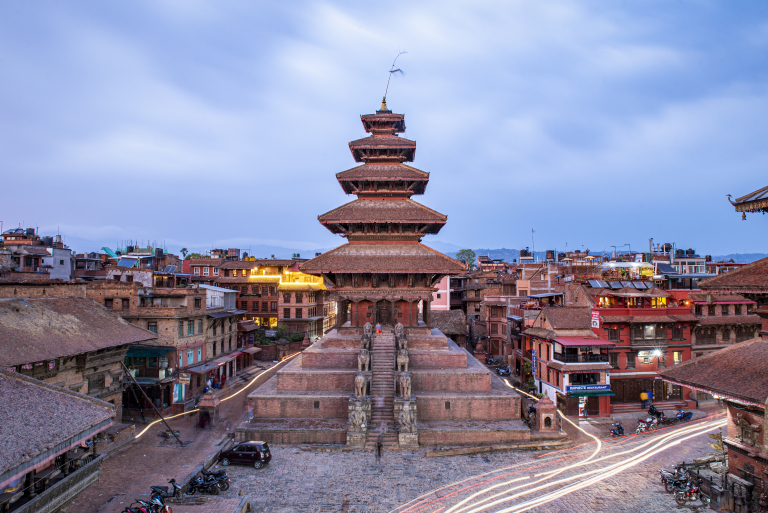
Taumadhi Square and Nyatapola Temple
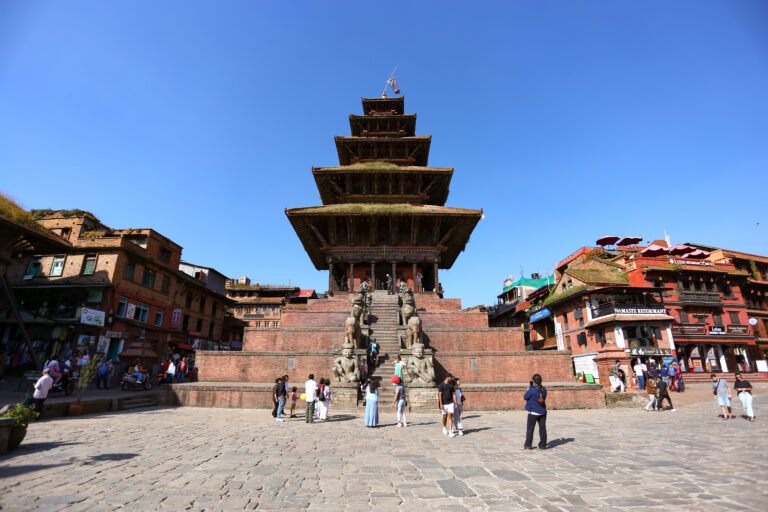
Taumadhi Square is dominated by the five-storey Nyatapola Temple, one of the tallest pagoda temples in Nepal, guarded by pairs of stone figures on its stairway. The steps of the temple are also a favourite meeting point for locals, which makes the square ideal for candid street photography.
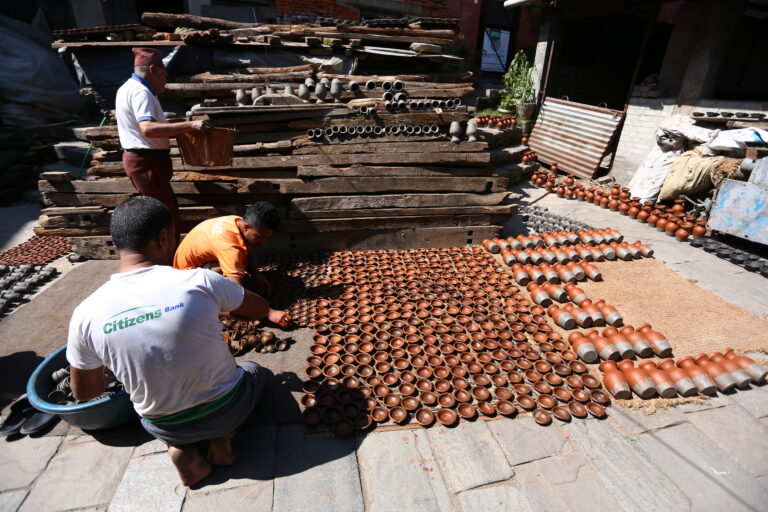
Pottery Square
In Pottery Square, potters shape clay on spinning wheels and leave rows of pots and lamps to dry in the sun. The activity peaks before Tihar, when thousands of clay lamps are made for the festival of lights.
Dattatreya Square
The quieter Dattatreya Square in the east of the old town is known for its tall Dattatreya Temple and the famous Peacock Window, a masterpiece of Newar woodcarving that rewards close, detailed shots.
Plan a Bhaktapur Photography Walk
Bhaktapur lies about 13 kilometres east of Kathmandu and can be reached in roughly an hour by road, depending on traffic. Staying overnight in the old town is worth it, because the squares are calm and almost empty in the early morning, when locals visit temples, sweep courtyards and open their shops.
A relaxed half-day walk can cover most of the highlights. Start at Bhaktapur Durbar Square at sunrise, then walk down to Taumadhi Square as the city wakes up. Continue to Pottery Square to watch the potters at work, stop for lunch and a bowl of juju dhau, and finish in Dattatreya Square in the softer afternoon light. If you still have energy, look for a rooftop café overlooking one of the squares to photograph the sunset over the temple roofs.
Portraits and Daily Life
Some of the most memorable Bhaktapur images are not of monuments but of people. Women in the traditional black and red Haku Patasi, men playing music outside temples, children running through the lanes and families drying rice and grain in the squares after harvest all show a city where heritage is still part of daily life. A 35mm or 50mm lens is ideal for this kind of natural, respectful street photography.
Festivals to Photograph in Bhaktapur
Bhaktapur’s festivals are some of the most dramatic in Nepal. During Bisket Jatra, held at the Nepali New Year in April, huge wooden chariots are pulled through the streets in a tug of war between the upper and lower parts of the city, and a tall ceremonial pole is raised and later pulled down. During Gai Jatra in August, processions of decorated participants and the energetic stick dance fill the lanes. Both festivals draw large crowds, so arrive early, keep your gear secure and choose a safe, elevated viewpoint where possible.
Tips for Bhaktapur Photography
- Visitors from abroad pay an entry fee for the heritage area; keep your ticket with you while exploring.
- Shoot in the first and last hours of daylight, when the warm light brings out the red brick and carved wood.
- Ask before photographing people at work or at prayer, and respect private courtyards.
- Take a break with a bowl of juju dhau, the creamy “king of curd” Bhaktapur is famous for.
Learn more about the city’s history on Wikipedia, and browse more Bhaktapur stock photos by local photographers on ImagePasal.